
CAP Theorem (CAP ConsiderRations)
CAP Theorem Data consistency: Every client connected to a distributed system should always see the same data, regardless of which node it connects to. The syste
GGAMI
CAP Theorem Data consistency: Every client connected to a distributed system should always see the same data, regardless of which node it connects to. The syste
Contents
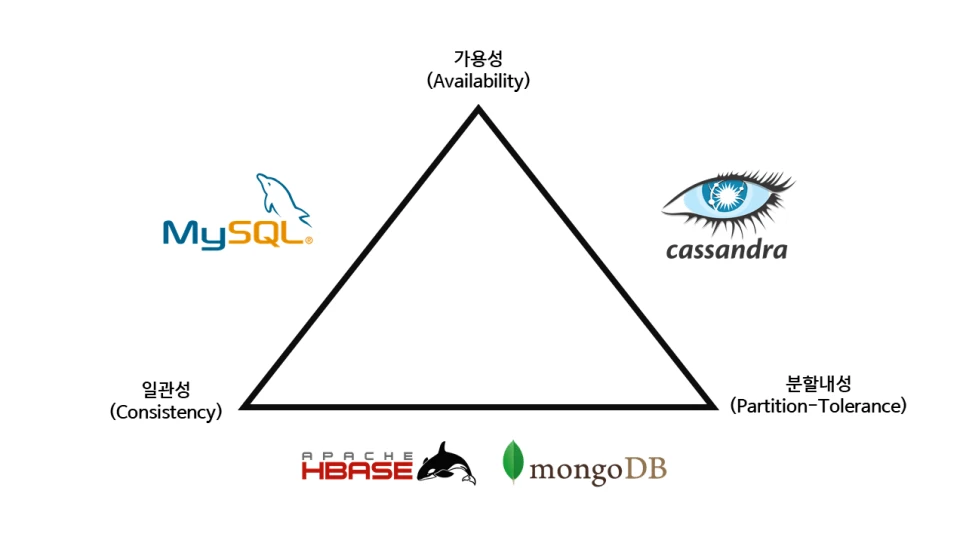
CAP Theorem
CAP 정리는 데이터 일관성(consistency), 가용성 (availability), 파티션 감내(partition tolerance)라는 세 가지 요구사항을 동시에 만족하는 분산 시스템을 설계하는 것은 불가능하다는 정리다.Data consistency: Every client connected to a distributed system should always see the same data, regardless of which node it connects to. The system always guarantees that the data is identical in response to requests. Put simply, the data retrieved is the same even when accessing it from different locations.
Availability: Clients connected to a distributed system should always be able to receive a response, even if some nodes fail. In other words, clients can always make read and write requests.
Partition tolerance: This means that a communication failure has occurred between two partitioned nodes. Partition tolerance means that the system must continue operating even if a network partition occurs. Partition tolerance is also called network partition tolerance. Put simply, a stock trading site prioritizes partition tolerance because its system must not go down.
CP, AP, and CA systems
CP system: A key-value store that supports consistency and partition tolerance. It sacrifices availability.
AP system: A key-value store that supports availability and partition tolerance. It sacrifices data consistency.
CA system: A key-value store that supports consistency and availability. It does not support partition tolerance.
However, since network failures are generally considered unavoidable,
distributed systems must be designed to tolerate partition problems.
Therefore, CA systems do not exist in the real world.
In other words, systems that provide only consistency and availability do not exist.